-
No Item Added in Cart.


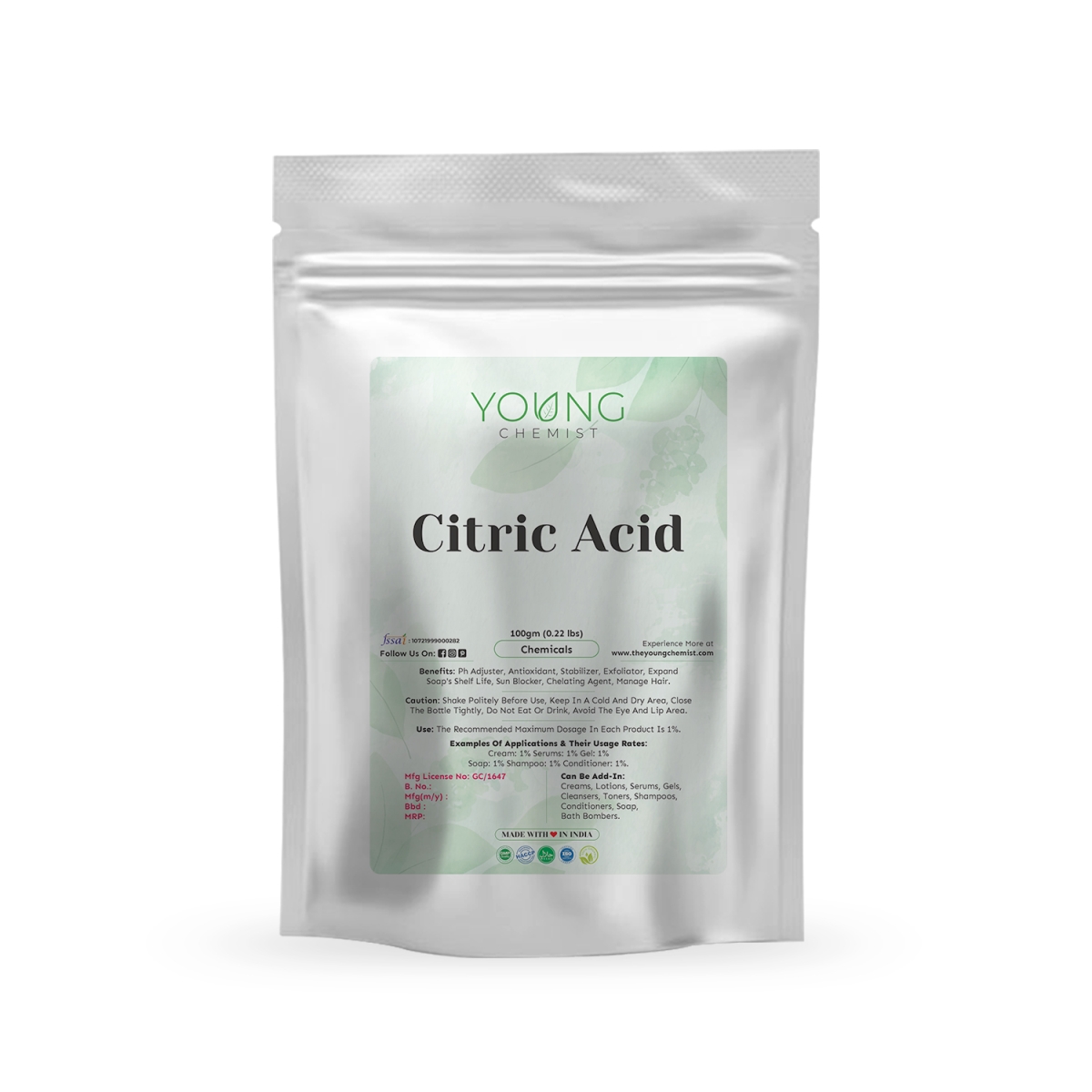
Young Chemist Citric acid is a naturally occurring organic acid that is commonly used in cosmetic products. It is derived from citrus fruits, such as lemons and limes, and is known for its acidic properties and pleasant citrus scent. In cosmetics, citric acid is used as a pH adjuster, preservative, and exfoliating agent.
Citric Acid is a versatile, naturally derived organic acid widely used across cosmetic, food, cleaning, and industrial applications for its exceptional pH-adjusting, chelating, and preservative-enhancing properties. Extracted from citrus fruits, this high-purity ingredient is valued for being gentle, safe, eco-friendly, and highly effective, making it a key component in countless skincare, haircare, personal care, and household formulations.
In cosmetics, Citric Acid plays a vital role in balancing pH, improving product stability, and boosting the effectiveness of preservatives. It helps maintain the freshness, texture, and performance of creams, lotions, serums, gels, shampoos, conditioners, and cleansers. Its mild exfoliating ability also supports smoother, brighter skin, making it ideal for face washes, toners, and peeling products.
In home care and industrial applications, Citric Acid is widely used as a powerful limescale remover, descaler, and natural cleaning agent. Its ability to break down mineral deposits makes it a preferred ingredient in detergents, dishwashing solutions, and eco-friendly cleaners.
In the food industry, Citric Acid acts as a flavor enhancer, preservative, and acidity regulator, commonly used in beverages, candies, sauces, and processed foods.
Formulators appreciate Citric Acid for its versatility, solubility, safety, and consistency, making it an essential ingredient for clean, high-performing, and stable formulations.
| Title | Description |
|---|---|
| No specifications available. | |
Citric acid is typically incorporated into cosmetic products during the formulation stage. As a consumer, you can find citric acid listed as an ingredient in various skincare, haircare, and personal care products. Follow the instructions provided by the manufacturer for the specific product you are using.
Citric Acid is highly versatile and can be added to a wide range of formulations. In cosmetics, dissolve it in the water phase and use small amounts (typically 0.1%–2%) to adjust pH in creams, lotions, gels, shampoos, and cleansers. In cleaning products, incorporate it as a descaling agent or limescale remover by dissolving it in warm water. For food applications, use the recommended dosage based on desired acidity or flavor enhancement. Always add Citric Acid gradually and check pH levels to avoid over-acidification. Store in a dry, airtight container to maintain purity and effectiveness.
Citric Acid offers multiple benefits that make it an essential ingredient in cosmetics, personal care, food, and cleaning formulations. As a natural pH adjuster, it helps maintain product stability and ensures formulas remain safe and effective. It also enhances the performance of preservatives, extending product shelf life. In skincare, Citric Acid provides gentle exfoliation, helping improve skin brightness, smoothness, and clarity. In cleaning products, it acts as a powerful descaler and limescale remover, effectively dissolving mineral deposits. In foods and beverages, it functions as a flavor enhancer and acidity regulator, offering a fresh, tangy taste while supporting preservation.
Note: It is always advisable to perform a patch test before using any new cosmetic product containing citric acid, especially if you have sensitive skin or a history of allergies.

Citric acid is a weak organic acid naturally found in citrus fruits like lemons and limes. It's a colorless, odorless crystalline solid that's highly soluble in water.
Citric acid has a wide range of applications, including:
Food and beverage industry: As a flavor enhancer, preservative, and acidulant.
Cleaning products: To remove stains, scale, and mineral deposits.
Pharmaceutical industry: As an excipient in various medications.
Personal care products: As a mild exfoliant and pH adjuster.
Industrial applications: In metal finishing, textile dyeing, and other processes.
Yes, citric acid is generally considered safe for consumption in recommended amounts. It's a natural compound found in many foods and is approved by regulatory agencies worldwide.
Citric acid is a natural and effective cleaner with several benefits:
Environmentally friendly: It's biodegradable and doesn't contain harsh chemicals.
Versatile: Can be used on various surfaces, including countertops, appliances, and bathroom fixtures.
Effective: Removes stains, grime, and mineral deposits without leaving behind a residue.
To clean your coffee maker with citric acid:
Fill the reservoir with a solution of equal parts water and citric acid.
Run a regular brew cycle.
Rinse the reservoir and brew basket thoroughly with clean water.
Yes, citric acid can help remove rust. Create a paste of citric acid powder and water and apply it to the rusted area. Let it sit for a few hours, then scrub with a soft-bristled brush. Rinse thoroughly.
While both citric acid and lemon juice contain citric acid, the concentration is higher in citric acid powder. This makes it more convenient and potent for cleaning and industrial applications.
Citric acid is generally safe for pets when used in recommended amounts and rinsed thoroughly. However, it's always a good idea to consult with your veterinarian if you have concerns.
Store citric acid powder in a cool, dry place in a tightly sealed container. Avoid exposure to moisture and excessive heat.
Citric acid products are widely available at online our websites ( https://www.theyoungchemist.com/ ).