-
No Item Added in Cart.


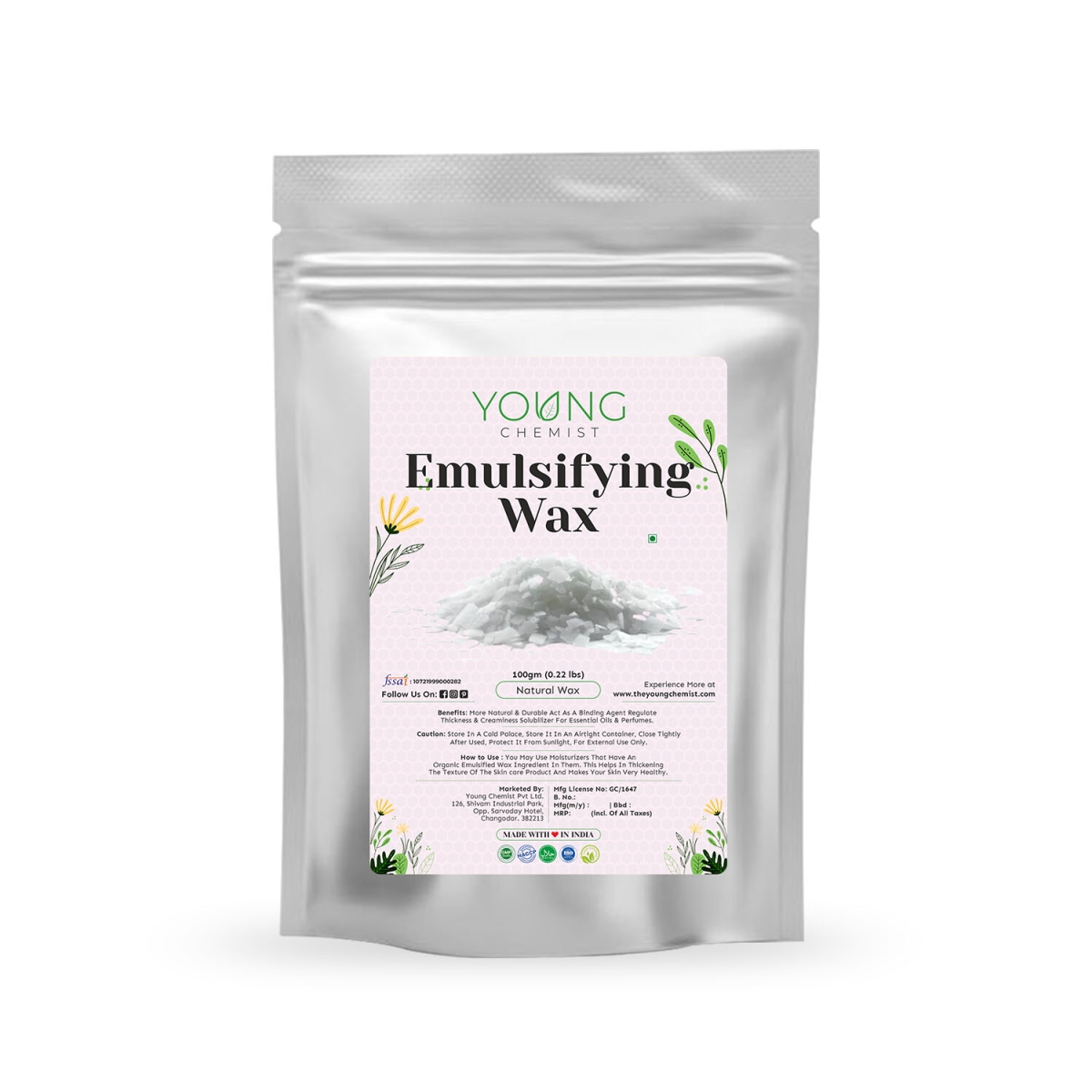
Young Chemist only sells the finest quality ingredients, and our emulsifying wax is no different. All of our products are custom tested by a team of experts who are industrialists with the knowledge and experience to ensure quality and consistency that is unmatched in our opinion.
Made from plant-derived fatty alcohols and esters, Emulsifying Wax is gentle on the skin and suitable for all skin types. It enhances product absorption while giving your formulations a smooth, elegant finish. Whether you're making everyday moisturizers, lightweight face creams, or luxurious body lotions, Emulsifying Wax provides the perfect balance between structure and softness.
| Title | Description |
|---|---|
| No specifications available. | |
To make lotions or creams, melt Emulsifying Wax in a double boiler with your chosen oils or butters. Heat the water phase separately, then slowly blend both phases while mixing continuously to form a smooth emulsion. Add essential oils or active ingredients once the mixture cools slightly. Use it in DIY skincare such as lotions, creams, conditioners, body butters, and serums for stability and texture. Typical usage rates range from 3% to 10% depending on thickness required. Apply your finished product to clean skin for deep hydration. Use regularly for silky, smooth, and well-moisturized skin.
Emulsifying Wax offers excellent stabilizing, softening, and texture-enhancing benefits. It helps bind oils and water together to create smooth, creamy lotions and creams that do not separate. Its natural emollient qualities add softness, making skincare products feel silky and comfortable on the skin. Emulsifying Wax also improves spreadability, enhances product absorption, and gives formulations a professional consistency. Suitable for all skin types, it is gentle, non-comedogenic, and perfect for both beginners and advanced formulators. In routine skincare, it helps deliver well-balanced, long-lasting, and luxurious moisturizers.

Emulsifying Wax is a cosmetic ingredient primarily used to blend oil-based ingredients and water-based ingredients into a smooth, stable, single product (like a cream or lotion). Oil and water naturally repel each other, so the wax acts as a bridge or stabilizer (an emulsifier), holding the two phases together and preventing the finished product from separating over time, which is crucial for product consistency and shelf life.
Emulsifying Wax NF (the most common type) is a blend of ingredients used specifically for cosmetic emulsification. It is generally created from fatty alcohols (like Cetearyl Alcohol or Cetyl Alcohol) that have been treated with a mild surfactant (like Polysorbate 60). While it is derived from plant-based sources (often coconut or palm oil), it does undergo a chemical process, so it is classified as a processed, functional cosmetic ingredient, not a raw natural wax.
Emulsifying Wax contributes significantly to the sensory experience and moisturizing capabilities of a product. When applied to the skin, it helps give lotions a smooth, luxurious texture and feel. It also provides co-emulsifying benefits; the fatty alcohols within the wax are often naturally moisturizing, helping to condition the skin and prevent water loss, leading to softer, more supple skin.
Yes, Emulsifying Wax is widely considered safe and non-irritating for most skin types, including sensitive skin, and has a long history of safe use in the cosmetic industry. Since it is rinsed off in cleansers and used in small percentages in lotions, it is generally considered non-comedogenic (unlikely to clog pores). Its primary function is structural, not occlusive like heavy raw waxes.
The difference is functional:
Emulsifying Wax: Its primary function is to chemically bond oil and water (emulsify). It is required when making stable creams and lotions containing both phases.
Beeswax/Carnauba Wax: These are primarily thickeners and hardeners. They stabilize the texture of oil-only products (like balms) but cannot, on their own, create a stable oil-and-water emulsion; they only make it slightly thicker.
Yes, Emulsifying Wax NF is a staple for DIY lotion and cream making. It is one of the easiest and most reliable emulsifiers for home crafters. To use it, you melt the wax into your oil phase (usually 20-25% of the total oil weight) and then blend it with your heated water phase using a stick blender until the mixture cools and thickens into a creamy lotion.
Emulsifying Wax NF is highly reliable and creates robust, professional-grade emulsions that last a long time. Natural emulsifiers (like Lecithin, certain plant waxes, or gums) often require much higher usage rates, are more sensitive to pH changes, and may create less stable or thinner lotions. For beginners seeking guaranteed stability, Emulsifying Wax is the easiest option.
It does both! Emulsifying Wax is a self-emulsifying and self-thickening wax. Not only does it blend the oil and water phases, but as the resulting emulsion cools down, the waxy components and fatty alcohols solidify, which is what gives the lotion its final, stable, and creamy thickness. The higher the percentage of emulsifying wax used, the thicker the final cream will be.
No, Emulsifying Wax does not have preservative properties. While it stabilizes the oil and water, the presence of water in the final lotion means it is susceptible to microbial growth (bacteria, mold, and yeast). You must always include a broad-spectrum cosmetic preservative in your lotion recipe when using water to ensure the product remains safe for use and has a decent shelf life.
For a standard, medium-consistency body lotion that is easily pumpable, a typical usage rate of Emulsifying Wax NF is around 3% to 6% of the total batch weight. For a very thick, heavy cream or body butter, the usage rate can be increased up to 7% or 10% to achieve the desired rigidity and stability.