-
No Item Added in Cart.


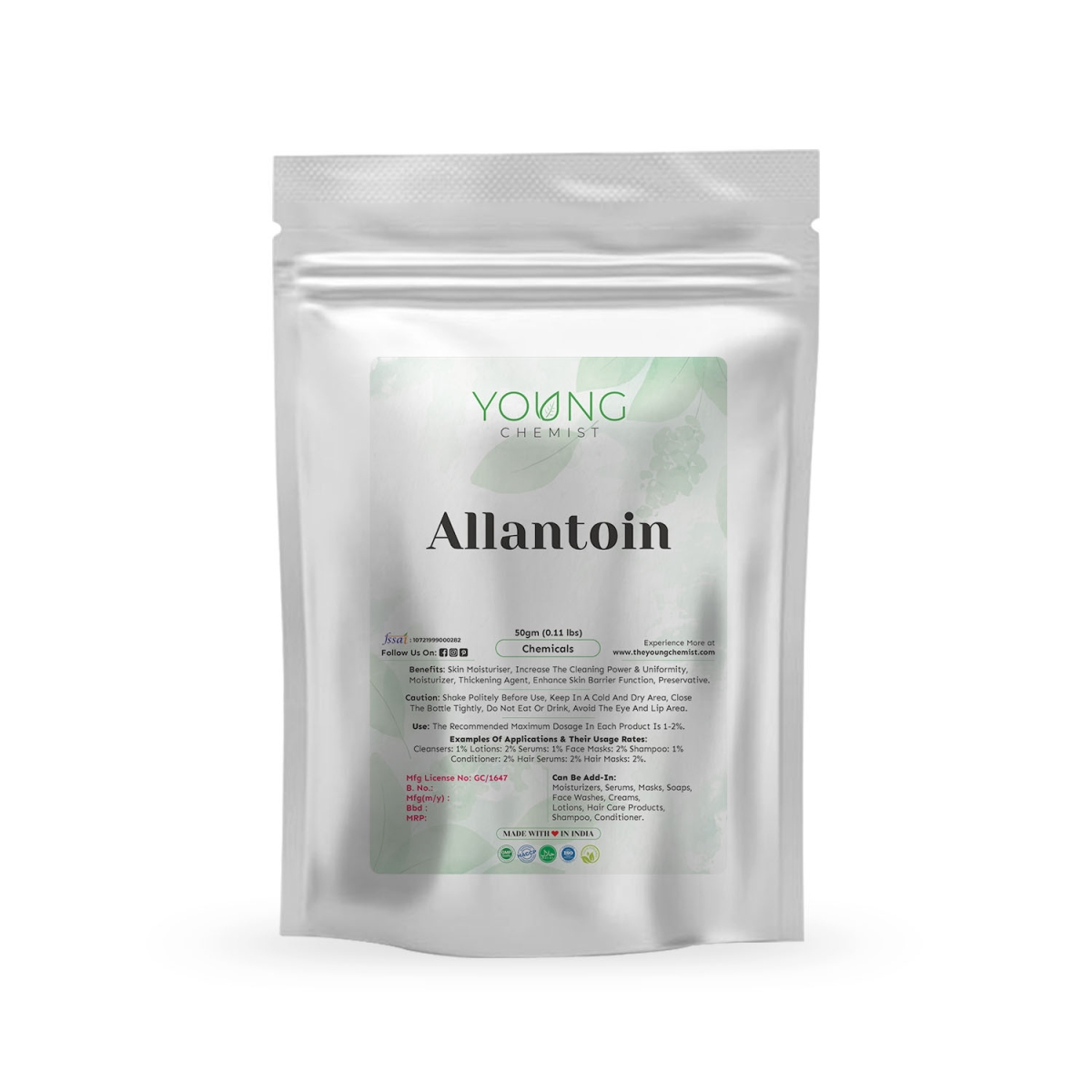
Young Chemist Allantoin is a cosmetic chemical that is widely used in skincare and beauty products. It is derived from plants, such as comfrey, and has various beneficial properties for the skin. Here is a description of allantoin, its benefits, how to use it, and some cautions to keep in mind:
Allantoins is a white, odorless powder that is water-soluble. It is a natural compound that can be found in the roots and leaves of the comfrey plant. Allantoin is also synthetically produced for commercial use in cosmetics.
Allantoin is a powerful skin-soothing and healing ingredient widely used in skincare, personal care, and dermatological formulations for its gentle yet highly effective performance. Known for its remarkable ability to calm irritation, reduce redness, and promote skin repair, Allantoin is ideal for products targeting sensitive, dry, damaged, or stressed skin. It enhances the comfort and feel of creams, lotions, gels, serums, toners, and healing balms by providing deep nourishment and long-lasting hydration.
This multifunctional ingredient supports the skin’s natural regeneration process by encouraging cell turnover and tissue repair, helping improve the appearance of rough, flaky, or uneven skin. Allantoin forms a protective barrier that locks in moisture and prevents dryness, while its soothing benefits make it perfect for after-sun care, baby care, acne-prone skin, and post-treatment products. Its lightweight, non-greasy texture ensures a soft, silky finish without clogging pores.
Formulators value Allantoin for its excellent stability, safety, and compatibility with a wide range of skincare ingredients, including humectants, emollients, botanical extracts, and actives. It not only enhances product performance but also boosts customer satisfaction by delivering visible results such as smoother, healthier, and more comfortable skin.
For brands seeking a gentle yet effective ingredient that supports moisturizing, healing, and skin-protective benefits, Allantoin is a must-have addition to modern, high-performance skincare formulations.
| Title | Description |
|---|---|
| No specifications available. | |
Allantoin is commonly found in various skincare products, including creams, lotions, serums, and masks. Follow the instructions provided on the specific product for the recommended usage.
Allantoin is easy to incorporate into a wide range of skincare and personal care products. It is typically added to the water phase and dissolved with gentle heating, ensuring full solubility. Recommended usage levels range from 0.1% to 0.5%, depending on the desired soothing and healing effect. Allantoin works well in creams, lotions, toners, serums, gels, ointments, cleansers, and baby care products. Avoid excessive heat above 70°C to preserve its effectiveness. Blend thoroughly until evenly dispersed. Allantoin pairs well with humectants, emollients, and natural extracts, enhancing product stability, comfort, and overall skin-repairing benefits.
Allantoin provides powerful soothing, healing, and moisturizing benefits, making it ideal for sensitive, irritated, or damaged skin. It helps calm redness, reduce discomfort, and protect the skin from dryness by forming a nourishing barrier. Allantoin promotes cell regeneration, supporting faster healing of rough, cracked, or flaky skin. Its gentle exfoliating effect helps soften and smooth texture, improving overall skin appearance. Suitable for all skin types, including baby and acne-prone skin, Allantoin enhances the comfort and performance of creams, lotions, gels, serums, ointments, after-shave products, and after-sun care formulations. It boosts hydration, softness, and long-lasting skin health.
Remember to check the ingredient list of the cosmetic product to ensure it contains allantoin if you specifically want to use it.
Allantoin is a naturally occurring compound found in plants like comfrey and chamomile, known for its soothing, moisturizing, and healing properties. It is widely used in skincare products to calm irritation, promote skin cell regeneration, and improve skin texture. Allantoin helps make your skin feel soft, smooth, and refreshed, making it ideal for all skin types, especially sensitive skin.
Allantoin offers multiple benefits — it hydrates dry skin, reduces redness, smooths rough patches, and supports faster healing of minor cuts or acne marks. It acts as a skin protectant by forming a barrier that locks in moisture while gently exfoliating dead cells. Its non-irritating nature makes it perfect for daily use in creams, lotions, serums, and face masks.
Yes, absolutely! Allantoin is known for its calming and anti-irritant properties, making it perfect for sensitive, acne-prone, and inflamed skin. It helps soothe irritation, minimize redness, and reduce dryness without clogging pores. It also aids in healing acne scars and preventing further breakouts, promoting a clearer, healthier complexion.
Allantoin works by stimulating new tissue growth and supporting the skin’s natural healing process. It helps repair damaged skin cells, fades scars, and smooths rough or flaky areas. Because of its cell regeneration ability, Allantoin is commonly used in wound-healing ointments, scar creams, and anti-aging formulations.
Yes, Allantoin is an excellent hydrating and moisturizing agent. It helps increase the skin’s water content while preventing moisture loss. This makes it highly effective in treating dryness, flakiness, and rough patches, leaving your skin soft and supple. Regular use of Allantoin-based creams or serums keeps your skin nourished and well-moisturized.
Yes, Allantoin is completely safe for daily use. It is a gentle, non-toxic, and hypoallergenic ingredient suitable for all skin types — even for babies and those with extremely sensitive skin. You can safely use Allantoin-enriched skincare products like moisturizers, toners, or body lotions every day to keep your skin smooth and healthy.
Definitely, Allantoin supports cell regeneration and collagen synthesis, which are essential for youthful skin. By gently exfoliating dead cells and promoting new cell growth, it helps reduce fine lines, smooth skin texture, and restore elasticity. Regular use of Allantoin-based skincare helps you achieve firmer, more radiant, and younger-looking skin naturally.
Allantoin isn’t just for skin — it’s also great for scalp care! It helps soothe scalp irritation, reduce dandruff, and keep the scalp hydrated. Many shampoos and conditioners include Allantoin to nourish hair follicles and promote a healthier scalp environment. This results in stronger, shinier, and softer hair with reduced flakiness and dryness.
Yes, Allantoin is known for its anti-inflammatory and skin-protective properties, making it suitable for eczema, psoriasis, and other dry skin conditions. It soothes itching, softens rough patches, and helps restore the skin barrier. However, it’s always best to do a patch test or consult a dermatologist for personalized skincare advice if you have severe skin issues.
Natural Allantoin, derived from plants like comfrey, is rich in beneficial phytonutrients that provide additional soothing and nourishing effects. While both forms are safe, natural Allantoin is more eco-friendly, gentle, and compatible with the skin’s natural healing process. Choosing natural Allantoin Products ensures you get the purest, most effective care for your skin and hair.